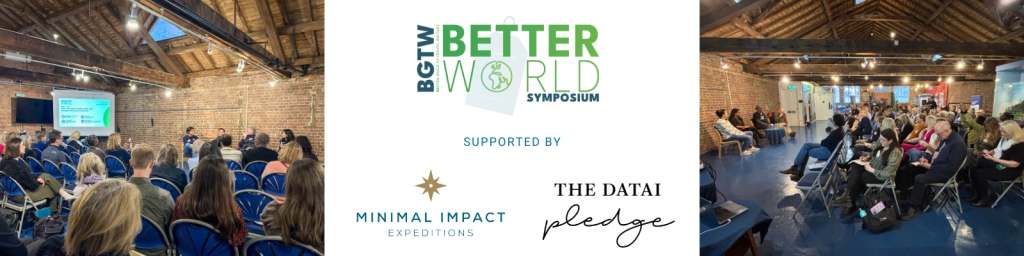
17 March 2026: Shaping the future of responsible travel media, the British Guild of Travel Writers (BGTW) hosted its second editorial-independent Better World Symposium, focused on sustainability, inclusivity, ethics, and responsibility in travel media. Today, the BGTW releases session recordings to the wider global travel industry for free via the BGTW Talks Travel Podcast.
Held on Monday 19 January 2026 at the London Canal Museum in King’s Cross, the symposium brought together leading travel journalists, editors, photographers and sustainability specialists to examine the evolving responsibilities of travel media in a rapidly changing world. The symposium was supported by Minimal Impact Expeditions, the future of low-carbon Arctic expeditions, and The Datai Langkawi’s sustainability initiatives, collectively The Datai Pledge.
Recognising the importance of the conversations, BGTW has made each session available through its established podcast platform, ensuring that the symposium’s insights from on-the-ground experts reach far beyond those in attendance to inform the wider travel and tourism sector globally.
The speaker lineup included Shebs Alom, Abi Best, Paul Brackley, Holly Budge, Jem Collins, Chris Coe, Meera Dattani, Karen Edwards, Emma Gregg, Sophie Ibbotson, Nathan James Thomas, Uwern Jong, David Lindo, Caroline Mills, Shafik Meghji, Ricardo Moreira, Rashmi Narayan, Debbie North, Sarah Rodrigues, Alicia Sheber, Heather Thorkelson, Holly Tuppen, Sue Watt, and Flavio Zappacosta. Video addresses were presented by Bafta-winner Charlie Hamilton James and Academy Award-winner Pippa Ehrlich, and the keynote was delivered by sustainability expert Juliet Kinsman.
Across the panel discussions, contributors explored the climate crisis, overtourism, greenwashing, inclusivity, accessibility, and the balance between commercial partnerships and editorial integrity. The seven sessions examined how travel storytelling can influence behaviour and help build a tourism economy that benefits communities while protecting the planet. Topics included:
- Solutions-led Storytelling with Juliet Kinsman, in partnership with The Datai Pledge. Kinsman inspired with an impassioned keynote about how to share stories with impact: “Sustainability doesn’t always get the clicks. It’s talking about sustainability without talking about it.”
- What will travel storytelling for a Better World look like in 2026? In a wide-ranging opening panel, four BGTW members discuss the reporting challenges we’ll likely face in the year ahead, from AI to evolving greenwashing. “You might see this lovely national park, greening of cities, but that doesn’t mean that on the ground it’s working for the communities around them. There’s a lot of work that needs to be done for us to really understand before it’s reported.” – Karen Edwards, Responsible Travel Writer & Editor
- Can luxury travel pioneer ESG initiatives? From architects designing refined resorts with the environment at the forefront, to the future of low-carbon, luxury expeditions, three experts discussed how high-end operators can set the standard. “And if we’re going into the places that are some of the most fragile environments in the world, why are we not doing this? That’s part of the story for the luxury market…you’re ground zero here. You’re funding what we intend to be the future. And that’s really exciting.” – Heather Thorkelson, Minimal Impact Expeditions Founder & Vice-chair, Polar Tourism Guides Association
- How can your words, work and imagery be more inclusive? Where has there been progress in inclusivity in travel media – and where are we regressing? Travel Writer Rashmi Narayan moderates a panel covering inclusive imagery to editorial bias, “And what I mean by that is sometimes you get commissioned primarily for accessibility-focused stories, even though you’d like to write about other aspects of travel.”
- Positive, community-friendly approaches to tourism storytelling. Whether a DMO or a travel writer, we all have a responsibility to ensure tourism benefits the communities it visits. Travel & Conservation Journalist Emma Gregg moderates this panel, discussing how “Features and documentaries about community experiences really work when they are very interview-based, when the producer or the writer has gone to a lot of trouble to interview people locally about what means stuff to them, emotionally and practically.”
- Money! How can the industry be sustainable if our income and budgets aren’t equitable? The elephant in the room can’t be avoided anymore. As moderator Meera Dattani, Journalist & Executive Editor at Adventure.com, introduces: “This is really about budgets from all sides. For us, as travel media, it’s about stagnant pay rates, publications that don’t pay or pay very little, and how that affects who writes and what stories get written.”
- Could that become your new sustainable niche or next feature? Niching down isn’t just a way to become an expert, but also to help protect and conserve what we hold dear as writers. As Holly Budge, founder of How Many Elephants NGO, says: “Really, I’m just trying to share their stories in their words. These days, I’ve become a bit more of a gatekeeper, if you like, between media platforms.”
The Better World initiative underscores BGTW’s commitment to raising editorial and ethical standards and fostering meaningful dialogue across travel journalism and the industry. By releasing the symposium sessions on its podcast, the organisation aims to widen access to these critical debates and encourage greater transparency, collaboration and accountability across the sector.
Daniel Clarke, Joint Chair of BGTW and the 2026 Better World Symposium curator, said: “The Better World Symposium was created to ask challenging questions about the role travel media plays in shaping perceptions and influencing behaviour. By releasing the sessions on our podcast, we are ensuring those conversations are not limited to one day or one room. We want the entire industry to engage with these issues, to reflect, and to be part of raising standards for the future.”
Renate Ruge, Joint Chair of BGTW, added: “Responsible travel journalism is no longer optional, it is essential. As storytellers, we help frame how destinations are understood and experienced. By making these sessions widely available, we are encouraging open dialogue, greater accountability and a shared commitment to reporting that supports communities, protects environments and inspires more conscious travel choices.”
The Better World Symposium returns in 2027, welcoming travel industry professionals to another dynamic and future-focused programme of debate, insight and inspiration. If you might be interested in speaking at, or supporting the 2027 edition, please email [email protected].
The Better World Travel Media Symposium sessions are now available to download on Apple Podcasts, Amazon Podcasts, Spotify, and the BGTW’s Acast Account.
For further information on the BGTW’s Better World Symposium, visit https://bgtw.org/better-world-travel-media-symposium/. Images of the event can be found here (c) BGTW.
For further information on BGTW, visit www.bgtw.org.
About BGTW
Founded in 1960, the British Guild of Travel Writers is the UK’s leading organisation for top-tier travel media professionals. Its members include award-winning writers, photographers, bloggers and broadcasters who produce trusted, independent travel content for audiences around the world.
Ends
Press Enquiries
Jo White
Click Travel Marketing & PR LTD
[email protected] | +44 7989 814340
Privacy Notice
This press release has been sent to you as a valued contact in the travel media or tourism sector. To opt out of future updates, please contact [email protected].